- Stroke of Confidence
- Pages
- Gear Guide

Gear Guide: The Tools I Trust
Wondering what I use when I play or practice? I put together this gear guide with the tools and products I rely on the most. From chalk that sticks to training aids that actually help, these are the things that keep me consistent. If you want to grab any for yourself, I’ve linked them all below:
ICA Training System | Deadeye Trainer | Cue Caddie | Chalk | Tip Tool | Cue Tip | Rack | Extension | Bridge | Towel | Glove | Cue Ball Trainer | Ball Cleaner | Table Cleaner | Shaft Cleaner

Best overall training tool: ICA Training System
🎁 Use the code StrokeICA at checkout to save $50 off the ICA Training System without the projector.

Use code StrokeICA to save $50 off the ICA Training System without the projector.
The ICA Training System is like having a coach, drill book, and practice partner all rolled into one. It uses a ceiling or wall-mounted projector to beam drills directly onto your pool table. Set up is fast, feedback is clear, and every drill feels like a game. Whether you're playing solo at home or trying to teach someone else, this system makes high-quality practice easy, repeatable, and way more fun.
Why I like it:
Instant Drill Layouts – No guessing where you should put the ball. No little white hole punch stickers. No wasted time. Drills appear on your table in seconds so you can spend more time shooting and less time setting up.
Loaded with Content – Comes with hundreds of preloaded drills, including aiming, cue ball control, and pattern play. You can also build your own custom drills and save them to your system.
Visual Guidance and Feedback – Each drill shows you where to hit on the cue ball, how hard to hit, and the path each ball should take. It takes the guesswork out of speed control and tip position so you can improve your cue ball control quicker than ever.
Fully Adjustable – Every drill can be scaled and rotated to fit your table size, layout, or practice focus.
User-Friendly – Simple interface that can be controlled through your phone. They also have guides and video tutorials to walk you through everything.
Downsides:
Setup Required – You’ll need a compatible projector and be able to mount it. Calibration can be a bit technical, but you only need to do it once and they are available to help with any questions you have.
Higher Cost Up Front – This is a top-of-the-line system and requires an investment up front. If you already have a projector, you can save by just buying the software. Additional training modules are sold separately.
If you’re ready to level up your practice routine, this system delivers. And good news—readers of Stroke of Confidence get a special deal: Use the code StrokeICA at checkout to save $50 off the ICA Training System without the projector.
This is perfect if you already own a projector or want to buy your own separately. It’s a great way to jump in at a lower price point and still get all the benefits.
Here is the recommended projector to use with the ICA Training System.
Best tool for pocketing: DeadEye Trainer
🎁 Use the code STROKE50 at checkout to save $50 off your order.

Use code STROKE50 to save $50 off the DeadEye Trainer
If you’ve ever wondered whether you’re really hitting where you think you’re aiming, this tool will answer that fast. The DeadEye Trainer is a precision aim trainer that gives you instant feedback after every shot. It’s one of the fastest ways to develop feel, accuracy, and trust in your stroke.
Why I like it:
Instant Visual Feedback – Green light for bullseye. Red light for a miss.
Adjustable Tolerance – Start wide, then tighten the margin as you improve. Like a built-in difficulty setting.
Zero Setup – No apps, no software, no stress. Drop it on the table and start shooting.
Confidence Boost – Once you go back to regular pockets, they feel huge. Suddenly that long cut doesn’t seem so bad.
Battery Powered – Runs on 4 AA batteries with an auto sleep mode. No cords or clutter on the table.
Downsides:
Narrow Focus – This is an aiming tool, not a full-table trainer. It won’t help with position or patterns.
The DeadEye Trainer is one of the fastest ways to level up your aiming. It’s clean, simple, and addictive. If you can’t figure out why you’re missing, this will help you see exactly what’s off and how to fix it.
And here’s a little bonus for Stroke of Confidence readers: Use the code STROKE50 at checkout to save $50 off your order.
Best tool for aiming/cue ball control: Cue Caddie
🎁 Use code STROKE35 for $35 off Cue Caddie Basic. Use code STROKE50 for $50 off Cue Caddie Pro.

Use code STROKE35 for $35 off Basic version. Use code STROKE50 for $50 off Pro version.
Cue Caddie mounts right on your cue and gives real-time guidance while you practice. The Basic version helps you aim accurately by showing the cut angle and ball fraction you need. The Pro goes further and tells you the spin and speed for cue-ball position too. You train with your actual stroke so skills transfer straight to live play.
Why I like it:
On-cue mounting – Attaches to your cue with two removable O-rings. Secure hold, easy on and off, no damage to your cue. Weighs just over 1.1 oz, so it doesn’t throw off your feel.
Aiming made clear – Shows the exact cut angle and fractional-ball hit so you know precisely where to aim. Fewer guesses, cleaner makes.
Pro version adds position play – Tell it where you want the cue ball to land and it suggests spin and speed to get there. Built-in position coaching on the next shot.
Builds real “feel” – Trains your pattern recognition so angles and routes start to pop out. The more correct reps you feed your brain, the faster your instincts sharpen.
Builds a pre-shot routine – Guides you through a repeatable pre-shot process. Less doubt, more consistency, especially under pressure.
Everything included – Device, O-rings, USB-C cable for charging, and a quick-start guide so you can hit the ground running. No wifi needed except to download updates.
Downsides:
Learning curve – You still have to translate the guidance it gives into consistent mechanics. It’s not a magic wand that will solve your aiming and speed control instantly.
Price vs simple aids – Costs more than basic aiming tools but that’s because it is the best tool out there for what it does.
If you want on-cue, real-time guidance that transfers straight to match play, Cue Caddie delivers.
👍️ Cue Caddie Basic – Aiming only. Shows where and how to hit the object ball. Best pick if you want a clean, lower-cost path to aim consistency. Use code STROKE35 for $35 off.
💪 Cue Caddie Pro – Everything in Basic plus position guidance. You specify the next position and it suggests spin and speed to get there. Ideal if you want integrated aim and cue-ball control. Use code STROKE50 for $50 off.
My chalk of choice: Taom V10 Chalk

In one of our newsletter polls, the majority of our readers said they use Master Chalk. This is not surprising as it’s been the standard for decades. But if you’ve never tried Taom V10 Chalk, it might be time to experiment. I switched over last year, and it’s earned a permanent spot in my case.
Why I like it:
Clean hands & tables – Leaves almost no residue on the cue ball or cloth. Also no more blue hands or stains on my cue shaft.
Smooth application – No gritty feel and coats evenly. I’ve also found that I have to chalk much less than normal.
Long-lasting – A single piece lasts much longer than standard chalk. My last piece lasted 7 months and my current one is at 5 months and counting.
Confidence boost – I’ve noticed fewer miscues, especially on power draws and other strokes requiring english.
Downsides:
Higher price than most chalks — Some might balk at the price tag for one cube but in my case, it’s been worth every penny. The longevity of each piece plus the improvement in my game makes it an easy decision.
So, if you’re interested in trying it out and making the switch, or just getting yourself a new piece, check it out at the links below. I’m confident you will quickly see the benefits it adds to your game.
🟢 Taom V10 Green
🔵 Taom V10 Blue
My tip tool: TipMaster TM61 6-in-1 Aluminum Pool Cue Tip Tool
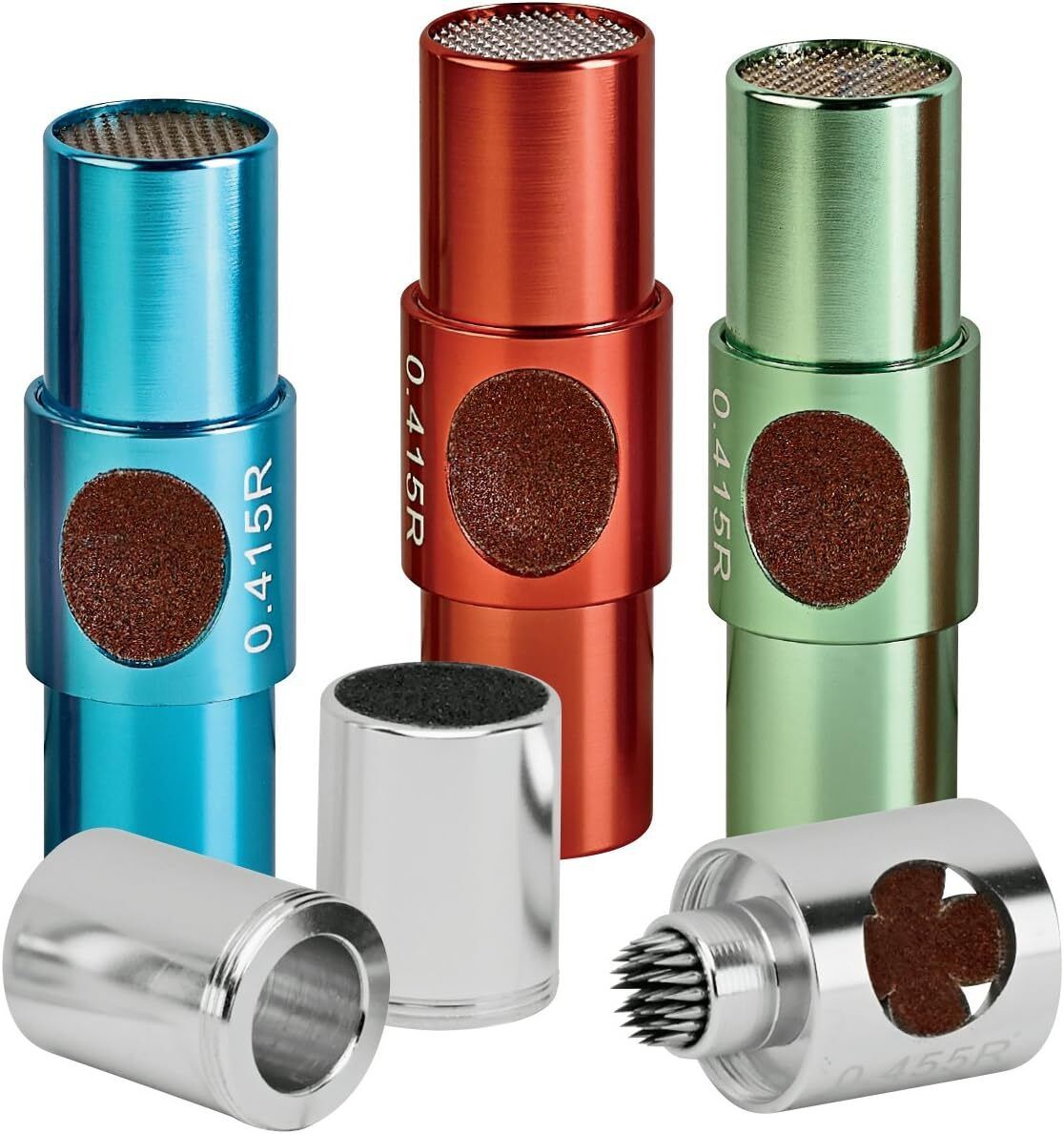
If you’ve ever been halfway through league night and realized your tip is mushroomed, your chalk isn’t sticking, and your shaft needs a quick touch-up, you know the panic of not having the right tool. I’ve been there, and since I started keeping the TipMaster TM61 in my bag, I’ve never been back. It’s not just another gadget; it’s the Swiss Army knife of cue tip care.
Why I like it:
All-in-one convenience – Shaper, scuffer, aerator, burnisher, and tip pick, all in one compact tool. Saves space and keeps everything in one place.
Solid build – Made from durable aluminum, so it feels sturdy in your hand and should last for years. I’ve had mine for 3+ years and it still performs like it’s new.
Quick fixes on the fly – Whether I’m at league or in a tournament, I can get my tip back in shape in under a minute.
Consistent tip performance – A well-shaped and maintained tip holds chalk better and grips the cue ball more effectively, leading to cleaner, more controlled shots.
Downsides:
Learning curve – If you’ve only ever used a single-purpose tool, figuring out all six functions might take a little practice.
Price vs. basic tools – Costs more than a cheap scuffer, but replaces several items at once.
If you’re interested in simplifying and upgrading your cue maintenance setup, you can check it out at the link below. The confidence it gives me knowing my tip is in tip-top shape (pun intended) is priceless.
🧰 TipMaster TM61
My cue tip: Taom Pro Laminated Cue Tip

If you want your cue to feel more responsive and consistent on every shot, upgrading your tip is one of the best moves you can make. The Taom Pro Tip has been a quiet game-changer for me. It’s got that solid, reliable feel that lets you stay aggressive without losing control.
Why I like it:
Clean grip – My preferred hardness is the soft tip. It grabs the cue ball well and is easily shaped and roughed up.
Consistent hits – Every hit feels consistent and reliable. This give me confidence in my stroke especially for shots requiring for spin.
Fewer miscues – Holds chalk really well, especially with Taom V10 chalk. I’ve seen a noticeable drop in miscues since using both this Taom tip and their chalk.
Pro-level quality – This tip doesn’t feel cheap. It’s designed for serious play from the experienced team at Taom.
Downsides:
Price – It’s not a budget tip. But if you’re serious about leveling up, it’s a worthy investment for your game.
Install required – Like most premium tips, this isn’t a screw-on. You’ll need someone with experience to install it if you don’t have the tools.
If you want more control over your cue ball and fewer inconsistencies in your game, this tip is a solid upgrade. Once I got used to it, there was no going back. You can check it out here:
My racks of choice: Outsville Accu-Rack Template Set

Racking shouldn’t be a guessing game. The Outsville Accu-Rack Templates help you rack fast, tight, and fair every time. No more tapping balls or eyeballing gaps. This thing lays flat, lines up clean, and gives you the kind of consistency you’d expect at a pro event.
Why I like it:
Super consistent – The tight rack means better breaks, fewer clusters, and cleaner runouts. If you don’t have to worry about how well the balls are racked, you can focus more on your break technique and strategy.
Support for all games – This set comes with racks for 8, 9, and 10-Ball along with a rack for 3-Ball Speed Pool and table savers that can help you break or jump without marking up your table.
Tournament-grade results – Used at major events like the US Open. If it’s good enough for the pros, it’s good enough for me.
Downsides:
Not always portable – These are super light and easy to carry, but you do not want to bend them. This often requires a folder of some kind if you want to take it to league night.
Not magic – It will give you a tight rack every time, but it won’t fix a sloppy stroke or poor cue ball control. Good breaking technique and knowledge is still needed.
If you're serious about improving your break spreads or just want to practice with pro-level consistency, this rack template is a great tool to have on hand. Grab yours here:
My cue extension: KONLLEN Pool Cue Extension

Sometimes a few extra inches is all you need on a shot. The KONLLEN Pool Cue Extension is a simple, solid tool that gives you just enough reach to make long shots or stretch shots way more comfortable.
Why I like it:
Instant reach – Attaches quickly to the butt of your cue to give you extra reach. Perfect for shots where the cue ball ends up in no man’s land.
Lightweight and balanced – Made from carbon fiber, so it doesn’t mess with your stroke or make the cue feel back-heavy.
Size and brand compatibility – The extension is available in a variety of lengths. I got the 8” version. It also comes with multiple butt-end thread options to fit a variety of cue brands.
Easy to pack – It’s compact and fits in most cue cases without taking up much room. Great for travel and league nights.
Downsides:
Minor adjustment period – Even though it’s well-balanced, it might take a few racks to get used to the slightly longer feel.
If you want an easy way to add reach without sacrificing feel or control, this one’s a smart pickup. Especially handy for league players or anyone who hates using a bridge. Grab it here:
My bridge head: Moosehead Bridge Head

Some players prefer an extension, some players prefer a bridge, but we all run into shots that are just out of reach. The Moosehead Bridge Head is the easy fix. There’s a reason this thing has been around for years.
Why I like it:
Simple and effective – Pops onto the end of a cue in seconds. No screwing or tools needed.
Nine positions – Gives you multiple elevation options. Especially helpful for shooting over another ball.
Easy to carry – Lightweight and small enough to toss in your case or pocket. It’s the kind of tool you don’t need often, but when you do you’re glad you have it.
Downsides:
Nothing flashy – It’s not as sturdy or stylish as a custom bridge. It gets the job done, but it’s not something you’ll show off.
If you want a reliable tool for when your reach isn’t enough, this bridge head is a no-brainer. It’s cheap, compact, and way better than stretching and missing. Grab one here:
My cue towel: KONLLEN Billiard Cue Towel

Keeping your cue clean isn’t optional if you want smooth strokes and consistent feel. The KONLLEN Billiard Cue Towel is a simple, effective way to wipe down your shaft or even the cue ball between racks.
Why I like it:
Practical size – Small enough to fit in your case, big enough to actually get the job done.
Quick clean – Picks up chalk dust and sweat fast so your cue keeps its slick feel.
Durable material – Washable, soft, and won’t scratch your cue. You’ll get plenty of use before it wears out.
Downsides:
Not a deep clean – Great for wiping between shots or games, but you’ll still want a proper cleaner for heavy buildup.
If you want a no-fuss way to keep your cue feeling smooth every time you step to the table, this towel is worth adding to your kit. Grab one here:
My glove: Moori Professional Billiards Glove

A glove might not look like much, but it can completely change how smooth your stroke feels. The Moori Professional Billiards Glove gives you a consistent, slick surface for your cue to glide through—especially useful in humid rooms or on sticky tables. The fingerless design keeps it light and breathable while still doing the job.
Why I like it:
Smooth, consistent stroke – No more fighting with sticky shafts or sweaty bridge hands.
Fingerless design – Keeps your fingertips free for feel while still giving you glide where you need it.
Trusted brand – Moori is best known for high-quality tips, and their glove is just as solid.
Downsides:
Sizing matters – Be sure to get the right fit. Too loose and it bunches, too tight and it feels restrictive.
Not as durable as leather – Like most cloth gloves, it will eventually wear out with heavy use.
If you’re tired of inconsistent feel in your stroke or just want a simple way to smooth things out, this glove is a smart pick. Grab yours here:
My cue ball trainer: Jim Rempe Training Cue Ball

If you’re trying to level up your cue ball control and tip position, this is one of the best tools out there. This ball is designed by Hall‑of‑Famer Jim Rempe with training marks and dual sides (beginner + advanced). It gives real, usable feedback when you practice your English, draw, follow, and shot planning.
Why I like it:
Dual‑pattern design — one side helps with basics, the other challenges you with finer control.
Aramith phenolic build — durable and long lasting.
Instant visual feedback — you see how your cue hit the ball and adjust faster.
Includes instruction manual (56 pages) — nice touch for guided drills, especially for players who like structured practice.
Downsides:
Price bump — it costs more than other training balls but you get what you pay for.
If you want practice that actually translates to smarter shot control, this is a must in your bag. It’s not flashy, but it forces you to dial in your tip position and will lead to huge gains in cue ball control.
My pool ball cleaner: Aramith Pool Ball Cleaner and Towel Kit

If your pool balls are looking dull or rolling weird, this kit is an easy fix. The Aramith Pool Ball Cleaner and Towel Kit keeps your gear shiny and your game smooth. It’s quick to use, mess-free, and actually works. Definitely one of the easiest ways to level up your table without spending big.
Why I like it:
Aramith polish formula — Cuts through chalk, grease, and grime without being harsh. Specially made for phenolic resin balls so you’re not risking damage.
Noticeable results — Balls get that slick, glossy look again. You’ll feel the difference when they roll — especially on finesse shots.
Long-lasting bottle — You only need a little per session. One bottle will last dozens of cleanings, even if you’re doing a full set.
Cleaner + cloth combo — Everything you need is included. No hunting for extras or guessing what products are safe.
Compact and portable — Small enough to stash in your case if you play at pool halls or leagues.
Downsides:
Not the cheapest — Costs more than DIY solutions like soap and water, but those don’t protect your investment like this does.
Manual work — It’s not a spray-and-go. You’ll still need to put in a little elbow grease to buff each ball properly. If you're cleaning all 16 balls, it’ll take a few minutes unless you have a ball cleaner machine.
If you’re tired of chalk build-up, weird rolls, or foggy cue balls, clean 'em up with this. It’s fast, satisfying, and brings a subtle boost to your play.
My table cleaner: Ghost Billiards Dust Remover

I picked this up on a whim and now I use it every time I practice. The Ghost Billiards Table Dust Remover is one of those low-key tools that just makes life easier. If you’re tired of wiping down the table with an old brush or towel, this is a great upgrade.
Why I like it:
Quick cleanups – Just run it across the cloth and it grabs dust, chalk, and random debris way better than a brush. No need to break out the vacuum every time.
Gentle on cloth – Doesn’t drag or pull like some cheap brushes. The soft pad glides over the felt and keeps everything smooth.
Compact and easy – No batteries, no setup, no weird parts. It lives in my case now so I can clean the table before and after practice.
Downsides:
Not for deep cleaning — It won’t replace a full table vacuum or proper refelting. But for quick maintenance, it’s perfect.
If you’re serious about keeping your table in top shape, this little thing is worth grabbing. A clean table means clean, consistent shooting.
My shaft cleaner: Ghost Billiards Cue Shaft Polish

Keeping your cue shaft clean and smooth isn’t just about looks. It affects how the cue feels in your hand, how fluid your stroke is, and how confident you are at the table. I’ve been using the Ghost Billiards Shaft Polish, and it’s become a quick part of my routine. It restores that slick, like-new feel without being harsh on the wood.
Why I like it:
Slick, smooth finish – After a quick polish, the shaft glides through my bridge with zero drag. It’s a clean, dry feel without needing powder or gloves.
Quick to use – Just apply a little, wipe down the shaft, and you’re good to go. It takes less than a minute and makes a noticeable difference.
Gentle on wood or carbon fiber – Some shaft cleaners feel too abrasive. This one cleans without stripping away finish or drying out the wood.
Great for in-between deep cleanings – I still do a full shaft maintenance routine now and then, but this polish helps keep things smooth between sessions.
Downsides:
You’ll need a separate cloth – The polish doesn’t come with an applicator or towel, so make sure you’ve got a clean microfiber cloth handy.
Not a deep cleaner – This won’t remove heavy grime or chalk stains. It’s meant for quick upkeep, not full restoration.
If your cue shaft has started to feel sticky or sluggish, this is an easy fix that keeps your stroke feeling sharp. A quick polish before a match can make a big difference in comfort and confidence. Check it out here:
Note: Some of these links are affiliate links. As an Amazon Associate, I earn from qualifying purchases. There’s no extra cost to you.