- Stroke of Confidence
- Posts
- 🎱 Practice Smart, Perform with Confidence
🎱 Practice Smart, Perform with Confidence
Balls near the pocket, practicing vs performing, and the Mosconi Cup
Madison Gazda
December 04, 2025
Welcome to December and to another week of Stroke of Confidence. The year’s winding down, but the action has just begun in The Mosconi Cup. If you’re a fan of high-pressure, team-based competition, this is as good as it gets. While USA and Europe battle it out, we’ve got some more helpful tips to level up your pool game.
This week’s topics:
Playing position off a ball hanging in the pocket
Practice vs Performance mindsets
History of the Mosconi Cup
Let’s dive in:
TP5/TP5x are now $44.99

If you know golf, you know the ball matters. TP5 and TP5x are the balls top players switch to when they want tour-level speed, control, and feel. And this holiday season, TaylorMade has dropped the price to just $44.99. Stock up now, for less, and make every round feel a lot more dialed in.

Living on the edge

At first glance, a ball hanging in the pocket seems like a gift. But ask any experienced player and they’ll tell you, these shots can be some of the trickiest for cue ball control. You might make the ball every time, but if you aren’t thinking about position, you’ll be out of line for the next shot just as often. Playing position on a hanger takes precision, awareness, and a little creativity.
Here are some practical tips to help you control the cue ball on these shots:
The amount of object ball you hit matters a lot – The difference between a full hit and a thin cut (and everything in between) can change everything about how the cue ball moves after contact. Practice different hits and watch the reaction.
Top spin can reverse after hitting the rail – What started as top spin can turn into draw after hitting the object ball and the rail. This can cause the cue ball to slow down sharply or even die near the pocket. It’s a sneaky effect that can ruin your position especially if you're playing shape up-table.
The tangent line still applies, even on hangers – The cue ball will still take the tangent line off the object ball before spin or rails change the path. Even with a short distance, understanding that initial line helps you plan shape and rail paths more effectively.
It’s easy to underhit or overhit – Because the pot is guaranteed, players tend to get lazy with their pace. Stick to your routine and treat the shot with the same respect you would a tougher one.
Practice from different angles – Set up hanging balls and try approaching them from the side, straight on, and at various angles. Get a feel for how each entry point affects the cue ball.
Treat it like a position drill – You know you're making the ball. So shift your full focus to cue ball outcome. That mindset alone can tighten your control.
The hanger is a perfect shot for training cue ball finesse. Take time to run a few setups where the only goal is playing shape off a ball hanging in the pocket. You already know you can make the ball. The question is, can you control the cue ball well enough to keep the run going? That’s the skill that separates a shot maker from a finisher. Check out this video from Jasmin Ouschan for more tips on this tricky shot.

Use code StrokeICA to save $50 off the ICA Training System without the projector.

My shaft cleaner: Ghost Billiards Cue Shaft Polish

Keeping your cue shaft clean and smooth isn’t just about looks. It affects how the cue feels in your hand, how fluid your stroke is, and how confident you are at the table. I’ve been using the Ghost Billiards Shaft Polish, and it’s become a quick part of my routine. It restores that slick, like-new feel without being harsh on the wood.
Why I like it:
Slick, smooth finish – After a quick polish, the shaft glides through my bridge with zero drag. It’s a clean, dry feel without needing powder or gloves.
Quick to use – Just apply a little, wipe down the shaft, and you’re good to go. It takes less than a minute and makes a noticeable difference.
Gentle on wood or carbon fiber – Some shaft cleaners feel too abrasive. This one cleans without stripping away finish or drying out the wood.
Great for in-between deep cleanings – I still do a full shaft maintenance routine now and then, but this polish helps keep things smooth between sessions.
Downsides:
You’ll need a separate cloth – The polish doesn’t come with an applicator or towel, so make sure you’ve got a clean microfiber cloth handy.
Not a deep cleaner – This won’t remove heavy grime or chalk stains. It’s meant for quick upkeep, not full restoration.
If your cue shaft has started to feel sticky or sluggish, this is an easy fix that keeps your stroke feeling sharp. A quick polish before a match can make a big difference in comfort and confidence. Check it out here:
*Buying through this link helps support the newsletter at no extra cost to you.


Use code STROKE50 to save $50 off the DeadEye Trainer

Practice vs Performance
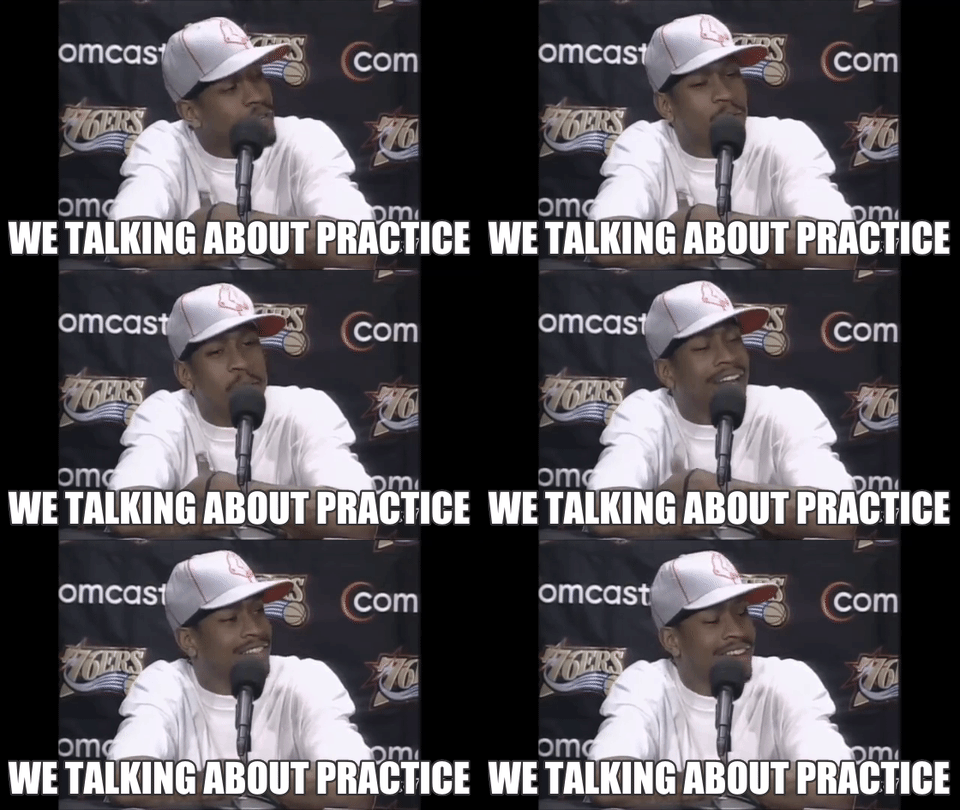
One of the biggest mental traps in pool is treating every shot the same, no matter the situation. But your mindset needs to shift depending on whether you’re practicing or competing. Practice and performance are not the same. When you learn to separate them, everything starts to click.
Practice is where you learn. It’s your lab. This is where you stop mid-stroke, reset a shot, and test out a new tip position. You try different speeds and patterns. It’s supposed to be a little messy. Mistakes are welcome here, because they show you where the gaps are.
Performance is where you simplify. You rely on the habits you’ve built. You focus on your pre-shot routine, stay present, and trust what you’ve practiced. This is not the time to experiment. It’s the time to commit. A strong performance mindset helps you stay focused, adjust under pressure, and get through tough moments without overthinking.
Here’s what the difference might look like in action:
In practice, you stop and re-hit the same shot to figure it out. In performance, you move on and stay in rhythm.
In practice, you’re building your foundation. In performance, you’re trusting that foundation to hold.
In practice, you’re trying to expose weaknesses. In performance, you’re trying to hide them.
In practice, you invite mistakes so you can learn. In performance, you accept mistakes and keep playing.
In practice, you challenge yourself with hard shots. In performance, you play smart and high percentage.
The key is knowing when you’re in which mode. Don’t bring your practice expectations into a match. When you separate the two and treat each with the focus it deserves, you’ll make progress faster and perform with more confidence.

Use code STROKE35 for $35 off Basic version. Use code STROKE50 for $50 off Pro version.

History of the Mosconi Cup
The Mosconi Cup has become one of the most iconic events in professional pool. Born in 1994 as a Ryder Cup-style team competition, it pits the best players from the USA against top talent from Europe in a high-pressure format. What started as a fun exhibition quickly evolved into one of the most competitive and emotional rivalries in cue sports. The team format, the shot clock, and the passionate crowds have all made it a must-watch event each year.
The documentary below dives into the early years of the Mosconi Cup and how it became the high-stakes showdown we know today. It’s not new, but it’s packed with great footage and behind-the-scenes stories that show just how much this event has meant to players and fans over the years. If you’ve ever wondered how the Cup became such a big deal, this is a great place to start.


🟢 Mosconi Cup - IN PROGRESS
Dec 3–6 | 9-Ball | Watch
Alexandra Palace, London, UK
🟢 Predator Jacksonville Events: Women’s 9-Ball World Championship, Men’s Open, Mixed Doubles
Dec 16– Dec 21 | 9-Ball | Watch
Jacksonville, Florida, United States

🔎 Got a question about pool?
Submit it here
We’ll feature it in a future newsletter.
📖 Our favorite books on the mental game
🧰 Gear I Trust: What’s in my case
👤 Follow us on Facebook
📸 Follow us on Instagram
📰 Want to start a newsletter like this one?
That’s all for this edition of Stroke of Confidence! Hope everyone has a good weekend of pool and we’ll see you here next Thursday.