- Stroke of Confidence
- Posts
- 🎱 Stop Scratching & Start Winning
🎱 Stop Scratching & Start Winning
Avoiding scratches, breaking out of a slump, and beginner trick shots
Madison Gazda
November 20, 2025
Welcome back to another edition of Stroke of Confidence! This week we’re talking about a few topics that unfortunately every player is familiar with: scratching and slumps. The good news is that we’ve got some tips to help you with both. Let’s get to it.
This week’s topics:
Common scratches and how to avoid them
How to break out of a slump
Trick shots for beginners
A word from our sponsor before we dive in:
All the stories worth knowing—all in one place.
Business. Tech. Finance. Culture. If it’s worth knowing, it’s in the Brew.
Morning Brew’s free daily newsletter keeps 4+ million readers in the loop with stories that are smart, quick, and actually fun to read. You’ll learn something new every morning — and maybe even flex your brain with one of our crosswords or quizzes while you’re at it.
Get the news that makes you think, laugh, and maybe even brag about how informed you are.

Starting from scratch

Scratching might seem like a minor mistake, but it can swing momentum fast. One loose shot can cost you the rack, give up ball in hand, and put your opponent back in control. The worst part? Most scratches are avoidable. They come from either not planning ahead or trying to force too much out of a shot.
Players often get so focused on making the ball that they forget where the cue ball is headed. And sometimes, the scratch doesn’t come from a wild stroke. It comes from a good shot with no thought behind it. If you want to stop giving away easy chances, you have to learn how to scratch less and play smarter.
Here’s how to tighten it up:
Check your tangent line – Visualize the tangent line before you shoot. If it heads toward a pocket, you can adjust your speed or add top or bottom on the cue ball to help avoid it.
Know when to bail – If a shot has a high scratch risk and low reward, pass. Play a safe or choose a different route. Don’t be stubborn and risk handing away the rack.
Practice common scratch shots – Set up straight in shots where you risk following it in, 50 yard line shots with the object ball on the spot, and shots down the rail that could scratch in the opposite corner. Learn how small changes in spin and speed shift the outcome.
Every scratch is feedback – Ask why it happened. What angle, spin, or speed led to it? Fixing one recurring mistake can save you racks. This is especially true when you keep scratching on the break.
Remember that scratches are avoidable – Some scratches are pure flukes off a bad roll or deflection, but for the most part this is the kind of mistake you can train out of your game with better awareness.
Minimizing scratches doesn’t mean playing scared. It means playing with awareness. When you start seeing where the cue ball wants to go and planning around it, you stop handing your opponent free chances. You stay at the table longer and control the pace. Check out this video below from Dr. Dave about how to avoid scratches in common scenarios where they can occur.
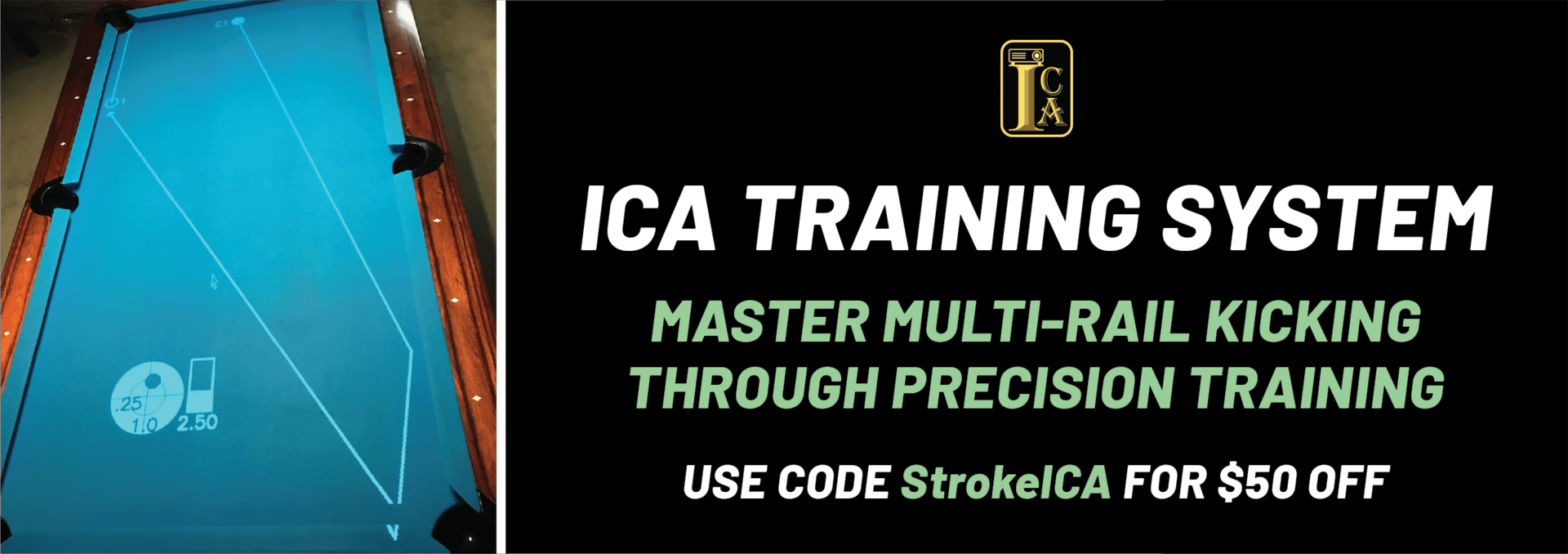
If scratches are holding you back, the ICA Training System helps you play smarter and stay in control. The projector system is built to sharpen your cue ball control through targeted, repeatable drills. Instead of random practice, you’re working specific routes and patterns over and over until they become second nature. That kind of focused repetition trains your brain to predict where the cue ball is headed how to keep it out of the pocket.

Best tool for aiming/cue ball control: Cue Caddie Pro

Use code STROKE50 for $50 off
The Cue Caddie Pro is one of the few training tools that helps you bridge the gap between practice and live play. It mounts directly to your cue and gives you real-time guidance on both aiming and position. That’s what makes it such a game-changer.
Why I like it:
Smart guidance, real-time feedback – Shows you the exact cut angle and fractional hit point, plus recommends the tip position and speed to reach your next position.
Makes aiming visual and simple – Seeing the contact point and angle laid out makes aiming less abstract. It helps you learn by doing, not just guessing.
Position play built in – You choose the target for the cue ball and it gives you the recommended spin and speed.
Teaches feel, not just theory – The more reps you get with it, the more angles and shot shapes start to stick in your brain. It’s pattern recognition in action.
Improves pre-shot routine – Helps you build a repeatable decision-making process before each shot so you’re ready when pressure kicks in.
No extras needed – Comes with the device, charging cable, mounting rings, and setup guide. No apps or Wi-Fi needed once it’s loaded up.
Downsides:
Not a shortcut – You still need to execute. This tool helps with planning, but it won’t magically fix your stroke. Use it to guide focused reps.
Higher cost than basic tools – Definitely a bigger investment than standard aids, but if you want deep, transferable training with real feedback, it delivers.
If you’re serious about sharpening your aim and cue ball control with a tool that works during your actual stroke, the Cue Caddie Pro is the best I’ve found.
🦾 Cue Caddie Pro – Includes on-cue aiming and position training. Use code STROKE50 for $50 off.
*Buying through this link helps support the newsletter at no extra cost to you.


Use code STROKE50 to save $50 off the DeadEye Trainer

Busting a slump

Every player hits a slump. It messes with your head. You start questioning your fundamentals, your gear, your routine, everything. But most slumps don’t come from a broken stroke. They come from a broken mindset.
When your confidence dips, your decisions change and the game feels foreign. The key is to stop trying to fix everything at once. Slumps aren’t about overhauling your game. They’re about getting back to your foundation and rebuilding trust in your process.
Here’s how to shift out of the fog:
Go back to basics – Get back to stop shots, clean follow-through, and basic position play. Let your confidence rebuild through repetition and success in simple, controlled situations.
Don’t chase perfection – Lower the pressure and focus on doing things right instead of doing them flawlessly. Progress builds faster when you're patient with yourself.
Get off the scoreboard – Don’t judge your game by the outcome of a set. Instead, pay attention to your patterns, your shot selection, and your mental focus. Results will come back when the process improves.
Shorten your sessions – If practice starts feeling like a grind, step away before frustration takes over. Focused 30-minute sessions where you feel in control are more valuable than hours of tense, scattered play. Finish while you’re still in a positive mindset.
Hit balls just to hit – Not every session needs a goal. Put on music, forget the score, and just stroke the cue ball around the table. Let your body reconnect with the feel of the game without trying to win or fix anything. This can help make the game fun again.
Control your self-talk – That voice in your head gets louder in a slump. If it’s saying things like “you’re off” or “you can’t make anything,” it’s going to affect how you play. Speak to yourself like a coach, not a critic. Keep it simple and supportive.
Focus on one shot at a time – When you’re struggling, it’s easy to panic about the whole match. Pull your focus back to just the next shot. Execute that one with clarity. Then do it again. That’s how you rebuild rhythm without overwhelming yourself.
You don’t need to be perfect to break out of a slump. You just need to be steady. One good shot is all it takes to turn things around. Stay present and committed. Let go of pressure and lean into your process. That’s how your game comes back.

Tricky business
Trick shots are more than just flashy fun. They teach creativity, precision, and cue ball control in ways that regular drills don’t. Learning how to curve the ball, jump, or squeeze into tight angles builds confidence and touch. Even if you never use them in a match, they improve your overall feel for the table and give you a deeper understanding of what’s possible with a cue.
If you’ve never tried trick shots before, don’t worry. You don’t need to be a showman to start. Dr. Dave has a great video that walks through a set of beginner-friendly trick shots that are fun to practice and easy to build on. Check it out below.


🟢 2025 International Open - IN PROGRESS
Nov 19–23 | 9-Ball | Watch
St Augustine, FL
🟢 Predator Spain Events: Men’s Open, Women’s Open, Mixed Doubles, Junior World Championships
Nov 25– Dec 2 | 9-Ball | Watch
Gandia Palace Hotel, Spain
🟢 WNT Stocks Memorial
Nov 28–30 | 9-Ball | Watch
Front Royal, VA
🟢 Mosconi Cup
Dec 3–6 | 9-Ball | Watch
Alexandra Palace, London, UK

🔎 Got a question about pool?
Submit it here
We’ll feature it in a future newsletter.
📖 Our favorite books on the mental game
🧰 Gear I Trust: What’s in my case
👤 Follow us on Facebook
📸 Follow us on Instagram
📰 Want to start a newsletter like this one?

Use code STROKE35 for $35 off Basic version. Use code STROKE50 for $50 off Pro version.
That wraps it up for this week. Shoot well this weekend and we’ll see you next Thursday!